



(The Epoch Times)—The Earth is too hot and only getting hotter, according to governments and global bodies such as the United Nations; and the efforts to reduce carbon dioxide aren’t having enough of an effect.
“The world is passing through the 1.5°C ceiling and is headed much higher unless steps are taken to affect Earth’s energy imbalance,” James Hansen, previous director of the NASA Goddard Institute for Space Studies, said in January.
Thus, to buy more time, on Feb. 28, scientists from NASA and the National Oceanic and Atmospheric Administration (NOAA) released a report detailing a solution called “intentional stratospheric dehydration,” or in layman’s terms, flying planeloads of ice to 58,000 feet and spraying ice particles into the upper atmosphere.
“It’s a very small effect,” said lead author Joshua Schwarz, a research physicist at NOAA’s chemical sciences laboratory. “Pure water vapor doesn’t readily form ice crystals. It helps to have a seed, a dust particle, for example, for ice to form around.”
The researchers report that by dispersing small particles, or what it calls ice nuclei, into areas of the atmosphere that are both “very cold and super-saturated with water vapor,” water vapor in the atmosphere will “freeze-dry” and rain out of the atmosphere as ice crystals, cooling the planet.
The proposal is known as geoengineering—and NASA and NOAA’s joint plan is far from the only idea that’s jumped from the pages of science fiction, à la the 2013 Hollywood film “Snowpiercer,” to mainstream science.
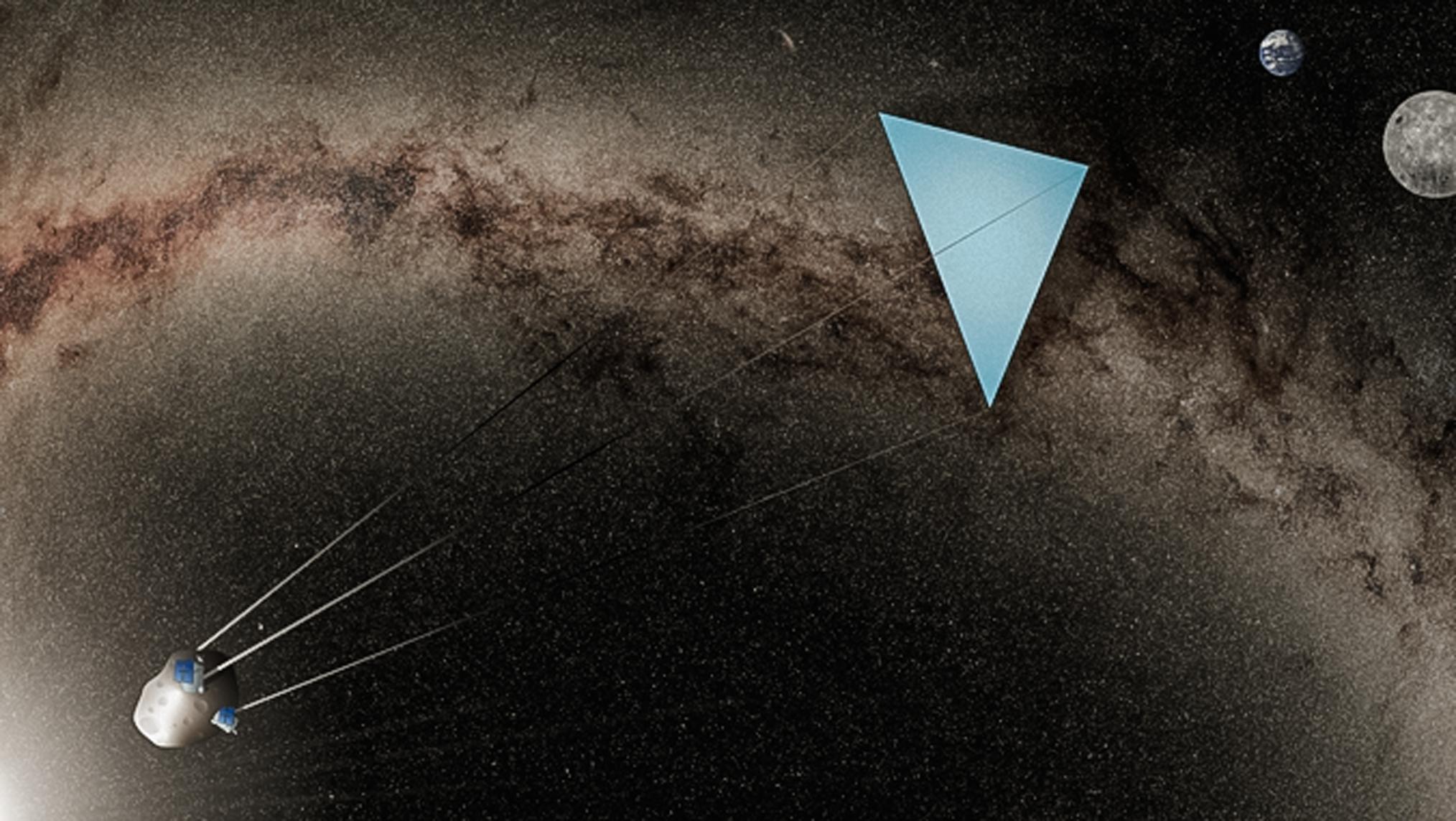
István Szapudi, an astronomer at the University of Hawaii Institute for Astronomy, has turned to essentially geoengineering a giant parasol, or what he calls, a “tethered solar shield” to shield the Earth from a portion of the sun’s energy.
“Any sunshield works by blocking a small fraction, circa 1 percent to 2 percent, of sunlight reaching Earth,” Mr. Szapudi told The Epoch Times. “This is an almost undetectable amount by looking at the sun, but it would still cool the atmosphere to pre-industrial temperatures according to climate models. Specifically, the tethered sun shield is a solution that is lighter, thus cheaper, by many orders than traditional designs.”

Technology entrepreneurs Luke Iseman and Andrew Song of Make Sunsets have already taken action and have been creating reflective, high-altitude clouds by releasing balloons full of sulfur dioxide (SO2) into the stratosphere, what they call stratospheric aerosol injection (SAI).
“With climate change rapidly transforming our world, it’s crucial that we prioritize action over words,” Make Sunsets stated on its website. “We believe that SAI is the immediate, necessary solution to cool the planet and buy us time to transition to a more sustainable future.”
But scientists such as Christopher Essex, emeritus professor of applied mathematics and physics at the University of Western Ontario and former director of its theoretical physics program, said carbon dioxide (CO2) isn’t the driver of Earth’s warmer temperature and that such geoengineering measures are “extraordinarily dangerous.”
“I used to run a climate panel for the World Federation of Scientists,” he told The Epoch Times. “And we had one session where we presented on exactly why geoengineering is extraordinarily dangerous. It’s a crazy idea.”
Ian Clark, emeritus professor for the Department of Earth and Environmental Sciences at the University of Ottawa, echoed Mr. Essex.
“Geoengineering the climate is a very scary prospect,” he told The Epoch Times. “It’s something that should be relegated to the fantasy realm and science fiction.”

The Oxford Geoengineering Programme defines geoengineering as “the deliberate large-scale intervention in the Earth’s natural systems to counteract climate change.”
Solar Shield
According to Mr. Szapudi, climate change is a looming threat, and greenhouse gases, such as CO2, are a driving cause of that threat.
He published a report on July 31, 2023, outlining his proposal for a tethered sun shield, what he calls solar radiation management.
“Solar radiation management (SRM) is a geoengineering approach that aims to reduce the amount of solar radiation absorbed by the Earth to mitigate the effects of climate change,” Mr. Szapudi wrote in his report.

“Two strategies proposed for SRM involve adding dust or chemicals to the Earth’s atmosphere to increase the reflected fraction of sunlight or reduce the incoming radiation from space with solar shades or dust.”
He’s advocating for a sun shield because he believes it is less risky.
When asked to comment on Mr. Essex’s claim that geoengineering is “extraordinarily dangerous,” Mr. Szapudi said: “Space-based geoengineering, especially if it is modular and reversible in design, carries less risk than Earth-based SRM injecting dust or chemicals into the atmosphere, and [it is] vastly less risky than doing nothing.
“Given what we know today and the known risks of climate change, a tethered sun shield near the L1 Lagrange point at 1.5 million kilometers from us would not present an obvious risk to Earth. The benefit is preventing and even reversing negative effects of climate change.”
NASA defines Lagrange points as “positions in space where objects sent there tend to stay put” because of oppositional gravitational forces. The agency has identified five such points.
Mr. Szapudi acknowledged that there could be unknown risks and said his proposal would need to undergo a more detailed scientific study, followed by a preliminary engineering study.
“Such a study would specify the location, the design, the materials, etc., that are most suitable. At that point, a quantitative and thorough risk assessment can be done, and a decision can be made [on] whether to go ahead with the implementation,” he said. “In general, any big project would go through many layers of risk, cost, and benefit analyses as the design shapes up, and any showstoppers identified would halt the project. Ultimately, only the most cost-effective and safest design, if any, will be implemented.”
But Mr. Essex, who built his first computer climate model in the 1970s and was chairman of The Global Warming Policy Foundation’s Academic Advisory Council, said part of the problem with a sun shield is that it looks at the climate from an engineering perspective instead of a scientific one.

“You might be able to generate some plausible argument for defining the actual parasol and getting into space,” he said. “But the part you don’t understand is how climate will respond to it.
“Because we’ve been pushing this propaganda as being able to solve a problem, it starts to appear like an engineering problem where you can do trial and error and see if it works or doesn’t work. But the climate problem is not an engineering problem; it’s a fundamental scientific problem. … It’s much more subtle and complex.”
Mr. Essex explained that solar radiation travels through the atmosphere, and while some believe that radiation causes warming at that point, that’s not what’s happening. Instead, the shortwave radiation hits the Earth, which heats the surface, and then the ground radiates that energy as longwave radiation into the atmosphere, increasing temperature.
“With the parasol, they’re trying to control shortwave radiation,” Mr. Essex said. “And it’s an indirect way of controlling what goes on with the longwave, the infrared.
“People like to think the Earth is like a brick, and it’s getting too hot, so we need to cool it down—global boiling, that’s the slogan—well, that’s ridiculous. It’s just about hyping up anxiety and fear so the people will go along with things and not question what’s going on.
“There’s so much going on in the atmosphere. It’s complex, conductive, and turbulent.”
Balloons of Sulfur
Like a sun shield, reflective aerosols fall under the definition of solar radiation management. But unlike a sun shield, reflective aerosols aren’t modular or immediately reversible.
Make Sunsets fills balloons with SO2, releases them, and then pops them once they reach the stratosphere to release the gaseous contents. The effect, Make Sunsets claims, is similar to volcanic eruptions.
“Emissions from volcanic eruptions have been cooling the Earth for millions of years, like Mt. Pinatubo in 1991. We are simply mimicking Mother Nature. … In 1991, Mt. Pinatubo, a stratovolcano, cooled the Earth by 0.9F or 0.5C for over a year,” it stated on its website.
So far, the group has released 49 balloons since April 2022 and claims that it has “neutralized 13,791 ton-years of warming.” It says its “clouds” of sulfur stay in the sky for between six months and three years, “depending on the altitude and latitude at which we release them.”
A group of Massachusetts Institute of Technology scientists reported in 2020 that releasing reflective aerosols into the stratosphere “could have other long-lasting effects on the climate.”
“Solar geoengineering would significantly change extratropical storm tracks—the zones in the middle and high latitudes where storms form year-round and are steered by the jet stream across the oceans and land,” their report reads. “Our results show that solar geoengineering will not simply reverse climate change. Instead, it has the potential itself to induce novel changes in climate.”
But, Make Sunsets claimed that, without mitigation such as reflective aerosols, “10s of millions of people will die, and 20 percent of species may go extinct.”
“We believe the best time to field test and scale SAI is now,” the group stated.
The group says it has been in contact with the FBI, the Federal Aviation Authority, and the NOAA.
“They are aware of our business and activities,” its website reads.
Mr. Essex said the problem with adding reflective aerosols is even more complicated than most realize.
“If you put more stuff in the sky, you don’t just absorb and scatter [radiation]. You get stuff sent back to you,” he said. “Depending on what kind of stuff and where it is—how high up it is—will affect whether it warms or cools. It could do both.”
Mr. Essex explained that if clouds are high enough, they help cool the atmosphere by emitting radiation into space instead of reflecting it back to Earth. Similarly, high enough CO2 cools the atmosphere instead of heating it because there’s less absorption between it and space.
“It depends on where it is in the atmosphere,” he said. “You have to do the whole radiative transfer problem to get this right. And a few groups are doing that, but they have a lot of trouble publishing because sometimes, they come up with answers that don’t agree with the narrative.”
Mr. Essex said simple adjustments can also change how water moves in and out of the atmosphere.
“All it requires is a little tweak of the right thing, and you can get completely different weather patterns. And then maybe you won’t be able to grow things you used to, and there’ll be problems with daily life that you never had to deal with before,” he said. “It can go both ways—cold can become warm, wet can become dry, and dry can become wet, and those changes can occur over the whole Earth.”
Make Sunsets acknowledged the risks associated with injecting the atmosphere with reflective aerosols, including ozone depletion, but stated that “science and math back us up.”
“Modeling shows a slight but meaningful depletion in ozone. While we’ll closely monitor this, it’s important to note that worst-case scenarios for ozone depletion amount to 5–10 percent on average,” its website reads. “This is less than half of what CFCs caused and may be at least partially offset by reduced global warming’s positive impact on ozone.”
In the late 1970s, scientists warned that manmade chemicals, such as chlorofluorocarbons (CFCs), were depleting the ozone. Then, in 1985, a hole was confirmed over Antarctica, leading to increased fear of skin cancers, damaged ecosystems, and the loss of plants and crops. In 1989, governments adopted the Vienna Convention for the Protection of the Ozone Layer, providing the framework for the Montreal Protocol, which eventually resulted in the phase-out of substances such as CFCs.
“Around 99 percent of ozone-depleting substances have been phased out and the protective layer above Earth is being replenished. The Antarctic ozone hole is expected to close by the 2060s,” the U.N. Environment Programme stated regarding the effort.
“Every year, an estimated two million people are saved from skin cancer and there are broader benefits too, as many of the ozone-depleting gases also drive up global temperatures.”
Mr. Clark said injecting aerosols into the stratosphere is dangerous, and not just because of the effect on storm tracks.

“We did a lot of work to try [to] clean up the atmosphere,” he said. “The Clean Air Act addressed things like nitrous oxide and sulfur fuels and diesel and stuff like that. And then they want to undo all that work? It seems pretty reckless to me.

“And we don’t want a cooler planet! I mean, history tells us that European civilization flourished under a warmer climate. And you know what we’re seeing—with precipitation, setting records and all the rest, and consequences of a warmer planet—is far better conditions to have than what happens when things freeze earlier and for longer. Agriculture is compromised. Transportation is compromised. Everything is compromised when it’s colder.”
Neither Mr. Iseman nor Mr. Song responded to The Epoch Times’ request for comment. Solar radiation management isn’t new, nor is it the only way some have looked to control the climate.
Indeed, Mr. Essex said he’s seen geoengineering ideas posited by scientists since the 1990s, and other possible “solutions” have included generating iron filing to cause algae blooms in the ocean, burning sulfur dioxide from ships to generate marine clouds, and using U.S. Navy artillery to fire dust into the stratosphere.
“The imagination of them all is quite extensive,” he said.
Mr. Essex believes that governments will eventually want to “control the weather with tax policy.”
“That’s basically what we have as the end game. Geoengineering is just another effort to try to control the weather,” he said.
Bypass Big Tech Censors
Two Storms, One Harvest

Every food crisis in living memory has been a one-shock event. The 2008 price spike was a commodity bubble. The 2020 shortages were a logistics failure. The 2022 grain scare was a war on one exporter’s ports. Each time, the system bent, adjusted, and recovered, and each time the experts assured us afterward that global markets are simply too big and too diversified to fail.
What nobody in Washington seems eager to discuss is that 2026 is shaping up to be something the modern food system has never actually faced. Two independent shocks, one climatic and one geopolitical, are converging on the same harvest cycle at the same time. Not sequentially. Simultaneously.
Start with the weather. The Pacific Ocean is currently building toward what forecasters now openly call a record event. NOAA’s Climate Prediction Center puts the odds of at least a strong El Niño near 88 percent, with roughly two in three odds it reaches “very strong” status, the tier reserved for perhaps three or four events in the entire satellite era. Every major global model now projects a median peak in Super El Niño territory, and most of them project it exceeding the 2015-16 event, which until now held the modern record. Sea surface anomalies were already brushing the super threshold in mid-July, months before these events normally peak. The atmosphere has already shifted into El Niño mode, and the event is forecast to crest in late fall and early winter.
This is not about “climate change.” It’s about the standard cycles of weather, and the cycle we’re currently in is one that has likely devastated societies in the past. We’re better prepared as a society today, but not all Americans are equally prepared.
Serious households have started doing the quiet math on their own. Grocery bills tell part of the story, and the forecast maps tell the rest, which is why long-term food storage has moved from fringe hobby to mainstream line item in the family budget, with established suppliers like Heaven’s Harvest seeing demand from people who five years ago would have rolled their eyes at the idea. That instinct is not paranoia. It is pattern recognition, and the pattern is worth walking through carefully.
Editor’s Note: Heaven’s Harvest IS a sponsor, but the warnings of this article are real and would be written even if we didn’t have a survival food sponsor. With that said, those who take advantage of what they offer can use promo code “Patriot” for 15% off.
The Fertilizer Clock Is Already Running
While the Pacific warms, the second shock has been unfolding in the Strait of Hormuz. The conflict with Iran turned the world’s most important energy chokepoint into a contested waterway, and the consequences reach far beyond the gas pump. Roughly a third of global fertilizer trade moves through Hormuz, and the disruption sent urea prices up 86 percent year over year by March, with a 53 percent jump in a single month.
The World Bank projects energy prices rising about 24 percent in 2026 and fertilizer about 31 percent. By its own accounting, fertilizer prices ran 35 percent higher in the first five months of this year than the same period last year.
Here is the mechanism the nightly news will not explain. Fertilizer is not a grocery item. It is a time-delayed input. The nitrogen a farmer in Iowa or Punjab could not afford to apply this spring does not show up as a problem this spring. It shows up as a thinner harvest six to twelve months later.
The World Bank’s own food security brief concedes that the effects of reduced applications earlier this season “are likely to become visible only later in harvest outcomes.” Translate that from institutional language into plain English and it means this. The damage is already done, it is already in the ground, and we are simply waiting for it to arrive on the shelf.
Now check the calendar. Six to twelve months from the spring planting season lands us squarely in late 2026 and early 2027. Which is precisely when the strongest El Niño in the instrumental record is forecast to peak, bringing its signature droughts to Southeast Asia, Australia, southern Africa, northern Brazil, and South Asia, the very regions that grow the world’s rice, sugar, and oilseeds.
The World Bank warns openly that a strong El Niño “could disrupt multiple crop belts simultaneously” on top of the conflict-driven input costs. Their baseline projection assumes the Middle East disruptions ease by autumn. What in the last two years of Middle East history suggests that assumption is safe?
The System Has No Slack Left
The comfortable answer is that global markets always adjust. But adjustment requires slack, and the slack is gone. Global cereal production is expected to decline from last year’s records even before El Niño does its work. The UN World Food Programme, hardly a den of right-wing preppers, is calling this the most significant disruption to its supply chains since Covid and the invasion of Ukraine, and its supply chain director put the stakes bluntly.
Today’s supply chain challenges are tomorrow’s hunger crisis.
There is also a political dimension that markets cannot price. When food gets scarce, governments do not behave like economists. They behave like politicians. Export bans, hoarding mandates, and panic buying at the national level turned the modest rice shortfall of 2008 into a global crisis, and analysts are already warning that import-dependent nations are the first dominoes.
The 2015-16 Super El Niño, a far weaker event than what is now forecast, threw tens of millions into food stress across Africa and Asia. This one is projected to be stronger, and it arrives with fertilizer already rationed by price and shipping lanes already contested by missiles.
What Joseph Knew
Scripture does not treat preparation for lean years as faithlessness. It treats it as wisdom delivered in advance to those willing to act on it.
Behold, there come seven years of great plenty throughout all the land of Egypt: And there shall arise after them seven years of famine; and all the plenty shall be forgotten in the land of Egypt.
Joseph did not respond to that warning with a hashtag or a committee. He stored grain during the years of abundance, and when the famine came, Egypt stood while its neighbors begged. The lesson is not that famine is certain. It is that the time to prepare is precisely when preparation still looks optional.
Nobody who filled a pantry in a year of plenty has ever regretted it, and nobody standing in an empty aisle has ever been glad he waited for certainty.
None of this calls for panic, and panic is the enemy of sound judgment anyway. It calls for the same unglamorous prudence our grandparents considered ordinary. Keep some cash margin, know your local growers, and put real food in deep storage while it is cheap and available, because the entire arc of this story is that cheap and available is a closing window.
Families looking for a straightforward place to start can visit Heaven’s Harvest and use promo code Patriot for 15 percent off long-term storable food. The forecasts may yet soften, the strait may yet reopen, and we should pray they do. But hope is a fine thing to hold and a foolish thing to eat.